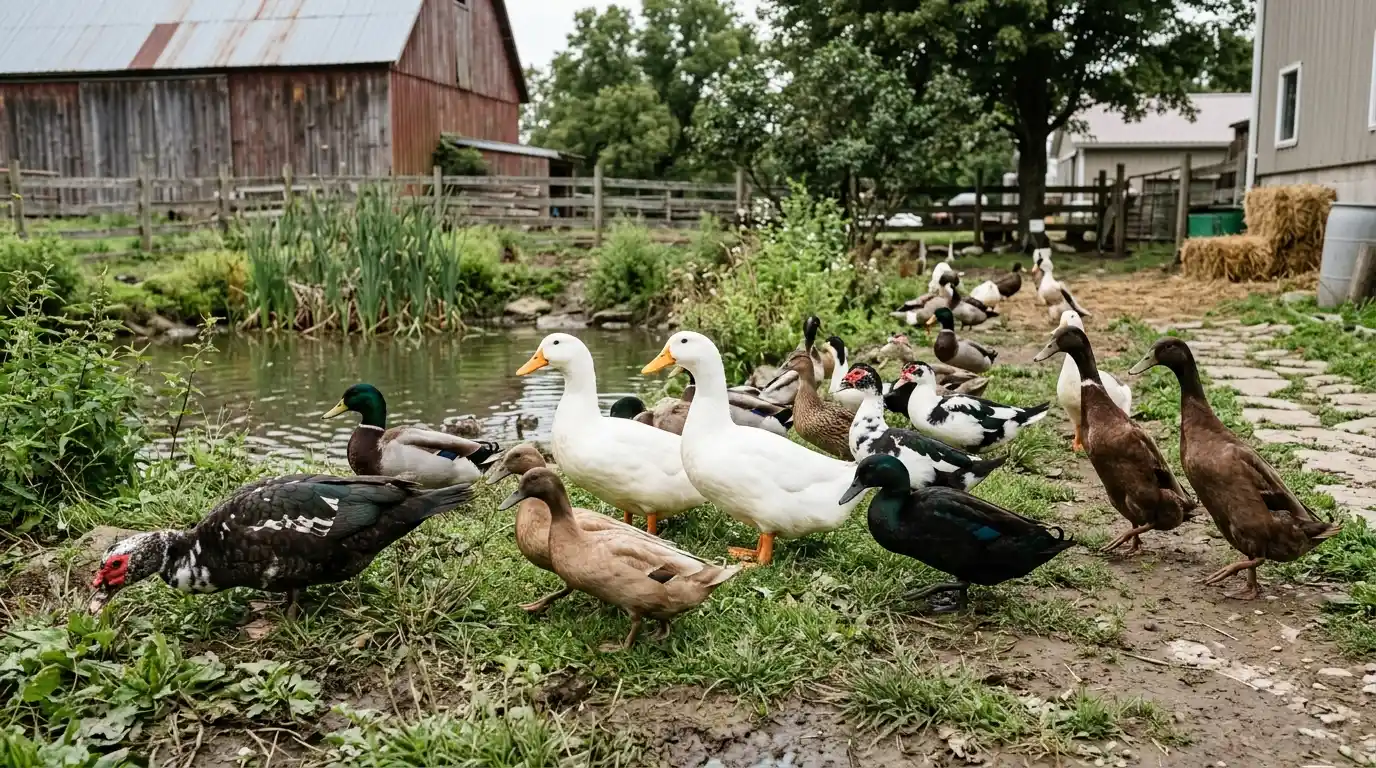
Choosing the right duck breed is one of the most important decisions you’ll make when starting duck farming in Kenya.
If you get it right, your farm becomes easier to manage, more productive, and more profitable.
If you get it wrong, you may struggle with slow growth, low egg production, or higher feeding costs than expected.
The challenge is that there isn’t just one “best” duck breed.
What works well in a rural setup in places like Siaya or Kisumu may not be the best option for someone farming in peri-urban areas like Kiambu, Kitengela, or Juja. Your space, your goal, and your experience level all matter.
In this guide, we’ll break it down simply and practically — so you can confidently choose the right duck breed for your situation and get started without second-guessing yourself.
Quick Answer: Best Duck Breeds in Kenya
The best duck breeds in Kenya depend on your goal.
- For egg production, Khaki Campbell is the top choice due to its high and consistent egg output.
- For meat production, Pekin and Muscovy perform well, with good growth and market value.
- For beginners or low-maintenance setups, Muscovy is usually the easiest to start with because it is hardy and adaptable.
If you’re unsure where to start, choose one of these three — they are the most practical and beginner-friendly options in Kenya.
How to Choose The Right Duck Breed
Before looking at specific breeds, it helps to understand how to choose.
Most confusion comes from trying to pick a breed without being clear on your own situation.
1. Your Goal
Start by asking yourself: what do I want from duck farming?
- Egg production → Choose high-laying breeds like Khaki Campbell
- Meat production → Go for fast-growing breeds like Pekin or hardy ones like Muscovy
- Breeding / selling ducklings → Choose strong, adaptable breeds that reproduce well
Your goal should guide your breed — not the other way around.
2. Your Setup (Where You’re Farming)
Duck farming in Kenya works in different environments:
- Rural setups → More space, easier to free-range
- Peri-urban areas (Kiambu, Kitengela, Juja) → Controlled feeding, smaller spaces
- Limited space setups → Require structured feeding and management
For example:
- Muscovy does well in free-range rural environments
- Khaki Campbell performs better in controlled feeding setups
3. Your Experience Level
- Beginner → Choose hardy, low-maintenance breeds (like Muscovy)
- More experienced → You can optimize for production (eggs or meat)
If you’re just starting, simplicity matters more than performance.
Once you’re clear on your goal, setup, and experience level, choosing the right breed becomes much easier.
Best Duck Breeds to Start With In Kenya
If you’re just starting duck farming in Kenya, these are the most practical and reliable breeds to begin with.
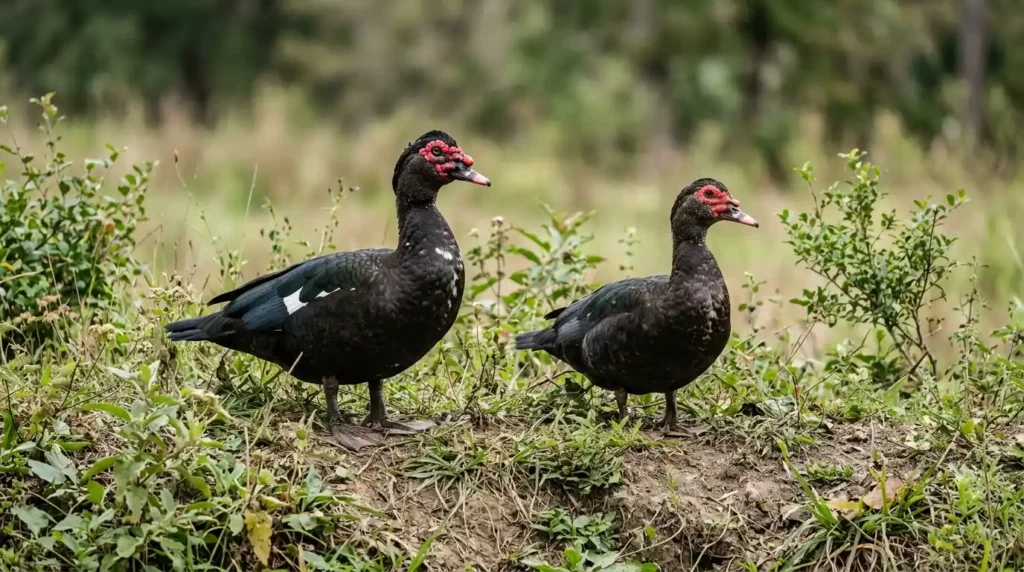
Muscovy Duck
Best for:
- Beginners
- Low-maintenance farming
- Meat production
Why it works in Kenya:
Muscovy ducks are one of the most common breeds you’ll find across Kenya, especially in rural and peri-urban areas.
They are hardy, adapt easily to different environments, and can survive with less intensive feeding compared to other breeds.
What to expect:
- Strong survival rate
- Moderate growth for meat
- Can forage if given space
Trade-offs:
- Slower growth compared to Pekin
- Not the best egg production
Who should choose it:
If you’re starting with limited experience or want a low-stress setup, Muscovy is usually the safest choice.
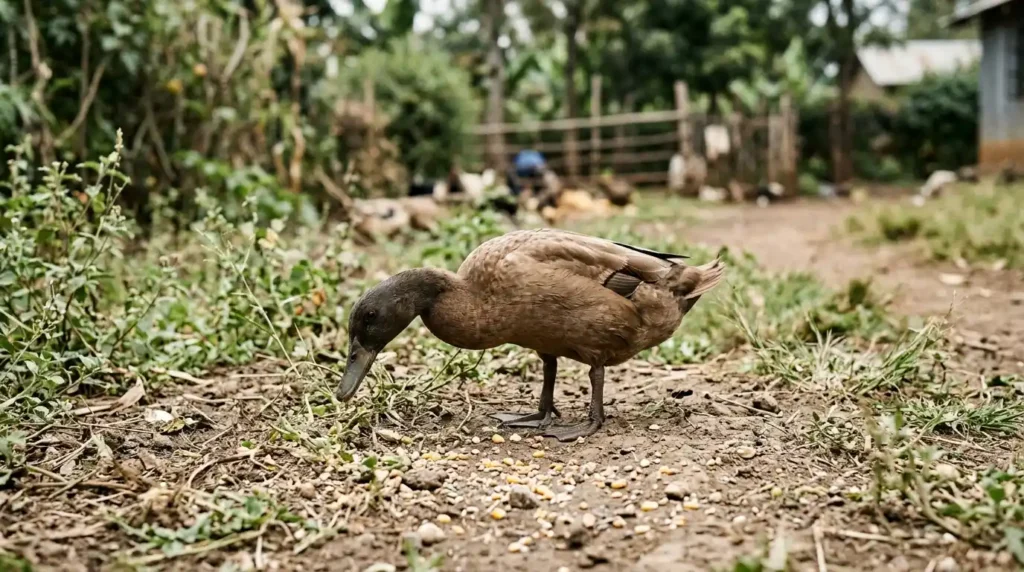
Khaki Campbell
Best for:
- Egg production
- Consistent income from eggs
Why it works in Kenya:
Khaki Campbell is one of the best egg-laying duck breeds available and works well in controlled setups where feeding is consistent.
It is especially suitable for peri-urban farmers targeting egg sales to households, shops, or bakeries.
What to expect:
- High egg production (up to 250–300 eggs per year under good management)
- Early laying compared to many breeds
Trade-offs:
- Requires more consistent feeding
- Less hardy than Muscovy in free-range setups
Who should choose it:
If your goal is egg production and you can manage feeding properly, this is one of the best breeds to start with.
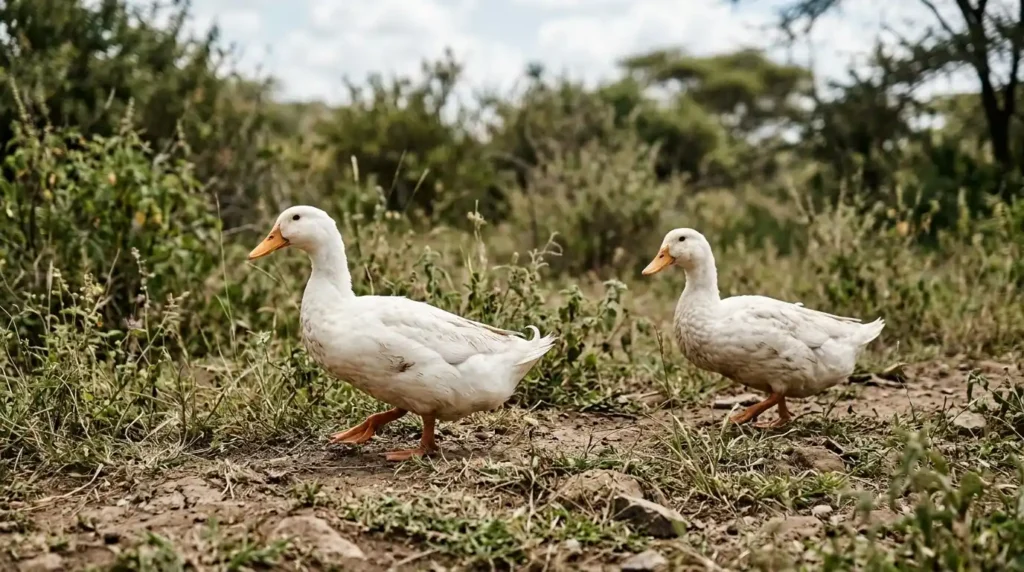
Pekin Duck
Best for:
- Meat production
- Faster turnover
Why it works in Kenya:
Pekin ducks are known for growing quickly and reaching market weight faster than most other breeds.
They are a good choice if your goal is to supply duck meat.
What to expect:
- Fast growth
- Good body size
- High meat yield
Trade-offs:
- Higher feeding requirements
- Needs more structured management
Who should choose it:
If you’re focused on meat production and want faster returns, Pekin is a strong option.
If you’re unsure
If you’re not sure which breed to choose, start with one of these three.
They are the most practical, widely used, and beginner-friendly duck breeds in Kenya.
Once you’ve identified the right breed, the next step is getting healthy starter stock.
Other Duck Breeds You Can Consider
After you understand the basics, you may also consider these breeds depending on your goals.
Rouen
- Dual-purpose (meat + eggs)
- Larger body size
- Slower growth compared to Pekin
Suitable if you want flexibility, but not usually a first choice for beginners.
Blue Swedish
- Balanced production (eggs + meat)
- Adapts well to different environments
A good alternative option, though less common than Muscovy or Khaki Campbell.
Cayuga
- Unique appearance
- Niche market appeal
Best suited for farmers targeting specialty markets rather than beginners.
Check breeds available at Nera Farm.
Less Common Duck Breeds In Kenya
You may also come across other duck breeds, but they are less common or not ideal for most beginners.
- Indian Runner → Good egg layers but not widely available
- Call Ducks → Mostly ornamental, not suitable for farming
- Aylesbury → Meat breed but rare in Kenya
If you’re just starting, it’s usually better to focus on breeds that are readily available and well-adapted to Kenyan conditions.
Duck Breeds Comparison Table
| Breed | Best For | Ease of Rearing | Notes |
| Muscovy | Beginners, meat | Easy | Very hardy |
| Khaki Campbell | Eggs | Moderate | High production |
| Pekin | Meat | Moderate | Fast growth |
| Rouen | Dual-purpose | Moderate | Slower growth |
| Blue Swedish | Balanced | Moderate | Adaptable |
| Cayuga | Niche | Moderate | Specialty market |
Best Duck Breed For Different Goals
To simplify your decision:
- Best for beginners: Muscovy
- Best for egg production: Khaki Campbell
- Best for meat: Pekin
- Best for low-cost farming: Muscovy
- Best for peri-urban setups: Khaki Campbell
Common Mistakes When Choosing Duck Breeds
Choosing based on availability
Many beginners buy whatever breed is available at the time — even if it doesn’t match their goal.
Copying what others are doing
What works for someone else may not work for your setup.
Ignoring your environment
Some breeds perform better in controlled setups, while others do well in free-range environments.
Always match the breed to your situation.
Where to Buy Duck Breeds In Kenya
When buying ducklings or mature ducks, focus on:
- Healthy, active birds
- Clear breed identification
- Reliable suppliers
Avoid:
- Weak or sluggish ducklings
- Unverified sellers
- At Nera Farm, we supply healthy, well-raised ducklings and mature ducks suited for Kenyan farming conditions — especially for beginners who want to start right and avoid costly mistakes.
Final Thoughts
Choosing the right duck breed doesn’t have to be complicated.
Once you understand your goal and your setup, the decision becomes much clearer.
Start simple, choose a practical breed, and focus on learning as you go.
Ready to Start?
The most important step now is getting healthy, well-raised ducks.
Browse available stock:
Or chat with us on WhatsApp for guidance and orders. You can also explore the cost of starting duck farming in Kenya to plan your setup.
FAQ
Which duck breed lays the most eggs in Kenya?
Khaki Campbell is one of the best egg-laying duck breeds, producing up to 250–300 eggs per year under good management.
Which duck is easiest to rear in Kenya?
Muscovy ducks are generally the easiest to rear because they are hardy and require less intensive management.
Which duck grows fastest for meat?
Pekin ducks grow faster than most other breeds and are ideal for meat production.
Can I rear ducks in a small space?
Yes, ducks can be reared in small or peri-urban setups with proper feeding, water access, and basic housing.