One of the biggest questions people ask before starting duck farming is whether it’s actually profitable.
And honestly, that’s a fair question.
No one wants to invest time, money, and effort into something that cannot realistically generate returns.
The good thing is that duck farming in Kenya can be profitable when approached properly. But like any farming business, profitability depends on things like feeding, breed choice, management, and how you start.
In this guide, we’ll look at how duck farmers make money, what affects profits, and what beginners should realistically expect.
Quick Answer: Is Duck Farming Profitable in Kenya?
Yes, duck farming can be profitable in Kenya, especially through eggs, meat, breeding, and duckling sales.
However, profitability depends heavily on feeding, breed choice, management, and starting with a setup you can comfortably sustain.
For many farmers, duck farming becomes more manageable because ducks are generally hardy, adaptable, and can fit into different setups ranging from rural free-range systems to more controlled peri-urban farms.
The key is usually not starting big — it’s starting properly.
How Do Duck Farmers Make Money?
One thing many beginners don’t realize is that duck farming has multiple income streams.
Duck Eggs
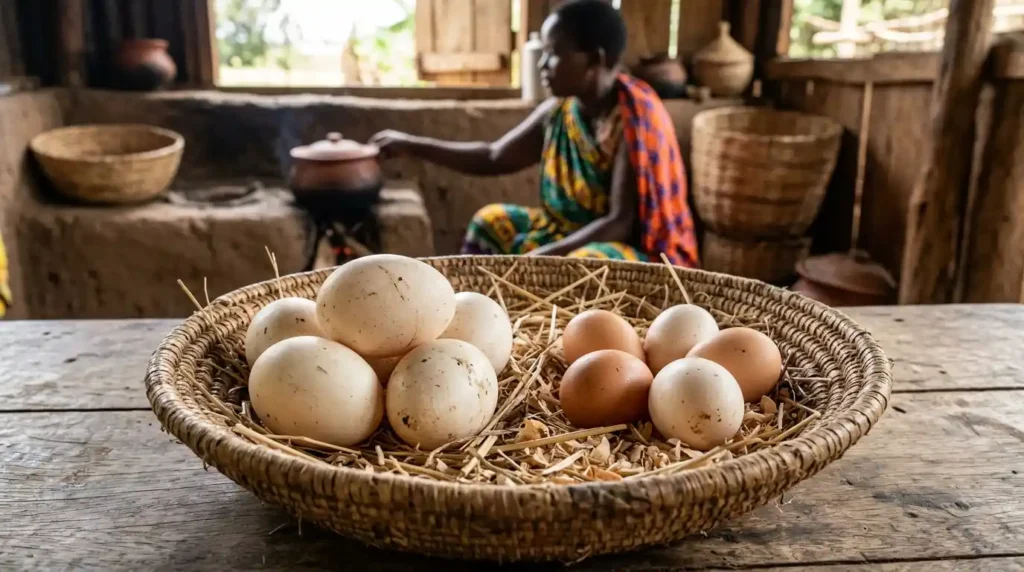
Duck eggs are becoming more popular in Kenya, especially among people looking for something different from regular chicken eggs.
Some customers buy them for home consumption, while others prefer them for baking because of their richer texture and larger size.
This creates opportunities for farmers supplying households, bakeries, and small businesses.
Duck Meat
Duck meat is still less common than chicken in Kenya, which actually creates an opportunity for farmers targeting a smaller but growing market.
Restaurants, hotels, and individual consumers looking for something different are slowly increasing demand in some areas.
Ducklings and Breeding
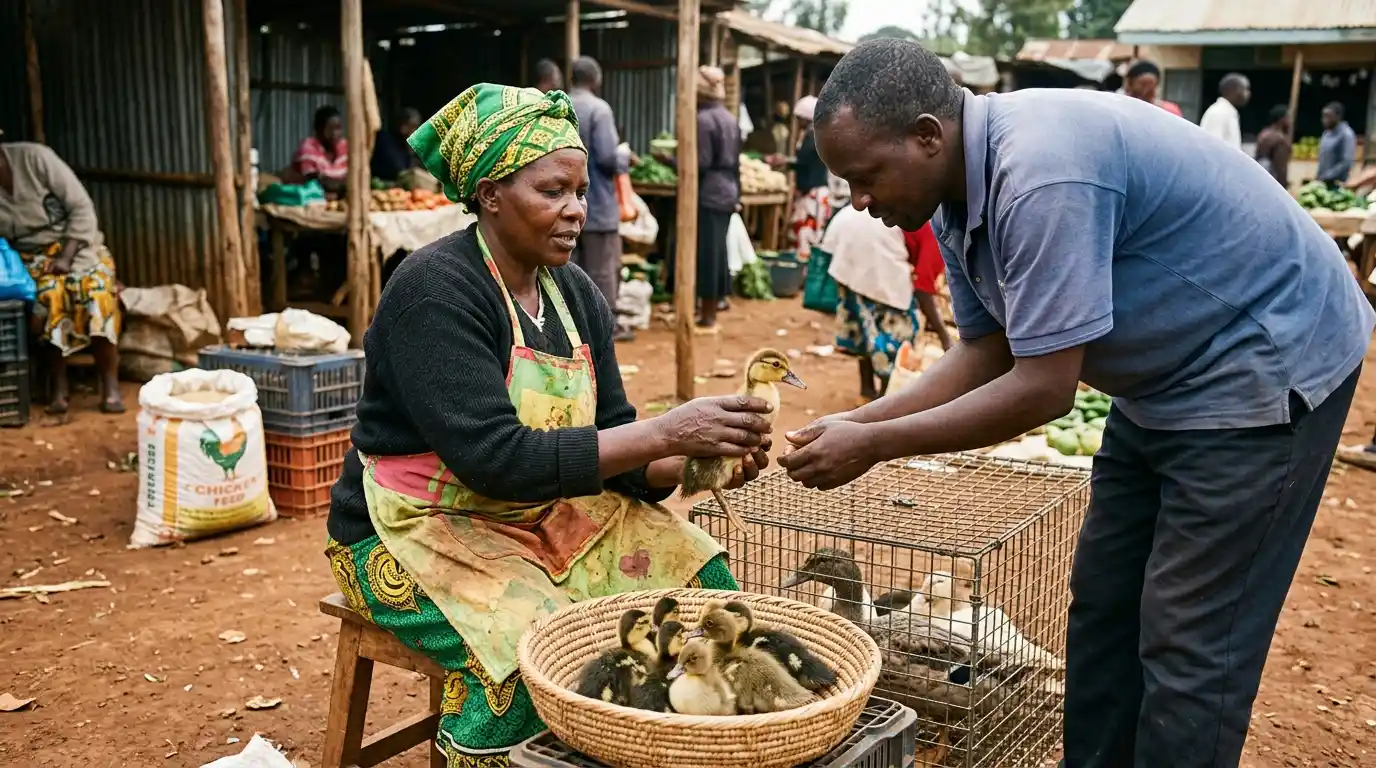
As more people become interested in duck farming, the demand for healthy ducklings also continues to grow.
This is why many farmers eventually move beyond just eggs or meat and begin breeding ducks or selling ducklings as an additional income stream.
Manure
While not usually the main source of income, duck manure can still be useful for kitchen gardens and farming.
Some farmers use it themselves, while others sell or share it locally.
Additional Opportunities
Another interesting thing about duck farming is that income opportunities sometimes come from places beginners do not even expect.
For example, Nera Farm was recently approached by an international pillow manufacturing company looking for a supply of duck feathers.
Now, this is obviously not the most common income stream for small farmers, but it shows how duck farming can open up niche opportunities beyond just eggs and meat as the business grows.
And honestly, this is one reason many farmers eventually start seeing duck farming differently once they spend more time in the industry — the opportunities can expand over time depending on your scale, consistency, and network.
What Actually Affects Profitability?
One mistake people make is assuming profitability only depends on how many ducks you have.
In reality, management matters much more.
Feed is one of the biggest factors. Poor feeding slows growth, affects egg production, and reduces overall performance.
Breed choice also matters.
Some duck breeds are better for eggs, while others perform better for meat. Hardier breeds like Muscovy are often easier for beginners to manage, especially in freer setups, while breeds like Khaki Campbell usually perform better under more structured feeding systems.
Mortality can also affect profits.
Weak ducklings, overcrowding, poor hygiene, or inconsistent feeding can quickly reduce returns even if you start with good intentions.
And honestly, one of the biggest mistakes beginners make is trying to scale too quickly before understanding the basics.
Which Duck Breeds Are Most Profitable?
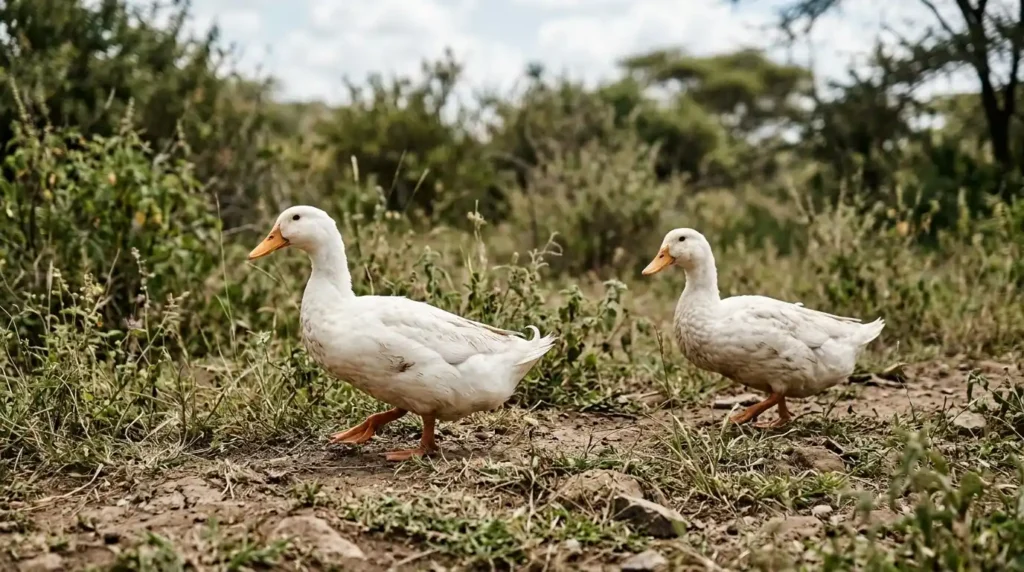
Different breeds become profitable in different ways depending on your goal.
Khaki Campbell ducks are popular for egg production because they lay consistently under proper management.
Pekin ducks are commonly preferred for meat production because they grow faster and develop larger bodies.
Muscovy ducks are usually one of the safest options for beginners because they are hardy, easier to manage, and generally cheaper to maintain in freer setups.
If you’re still comparing options, our guide on duck breeds in Kenya breaks down the strengths and differences between the major breeds in more detail.
Can You Start Small and Still Make Money?
Yes — and honestly, many people do.
Not everyone starts with hundreds of ducks or expensive structures.
Some farmers begin with a small flock at home, learn how feeding and management work, then gradually expand over time once they become more confident.
And even for us at Nera Farm, things did not become profitable immediately.
When we started in 2023, the hope was to begin selling within about six months. But in reality, it took closer to a year before things started stabilizing properly.
One challenge was that we began with mature ducks sourced from different farms, which meant we did not fully know how they had been raised or fed previously.
Some laid fewer eggs than expected, and before we fully understood how to care for young ducklings properly, we also experienced higher mortality rates than we anticipated.
It actually took around 18 months before we consistently started selling a few ducks, while egg production gradually improved as we gained more experience and reduced duckling mortality.
And honestly, that’s something many beginners do not hear enough: duck farming is not always instant profits.
Management, feeding, breed quality, patience, and learning from mistakes all play a huge role in how profitable the business eventually becomes.
The good thing is that once farmers understand their ducks better and improve their systems gradually, the farm often becomes much easier to manage and more productive over time.
Common Mistakes That Reduce Profits
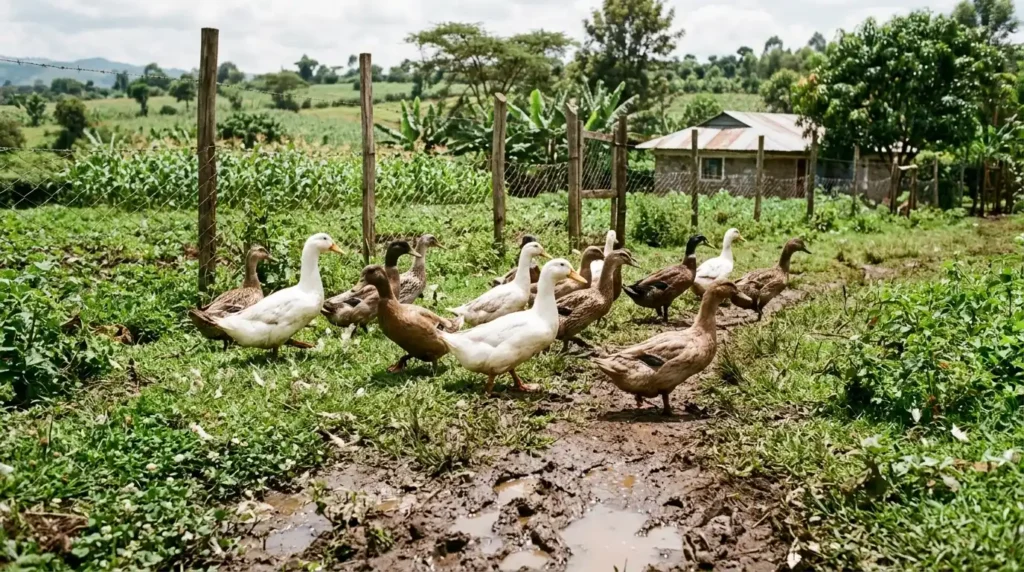
One common mistake is poor feeding.
Trying to cut feed costs too aggressively often affects growth and egg production, which reduces profitability in the long run.
Another issue is buying weak or poor-quality ducklings simply because they are cheaper.
Healthy stock usually performs better and creates fewer problems later.
Overcrowding is another challenge, especially in smaller setups. Ducks still need enough space, water access, and proper hygiene to remain productive.
And honestly, unrealistic expectations also frustrate many beginners. Duck farming is profitable for many people, but it still requires consistency, patience, and proper management.
Is Duck Farming Worth It in Kenya?
For many people, yes.
Duck farming in Kenya still has room for growth, especially because it is less saturated than chicken farming in many areas.
There is growing interest in duck eggs, duck meat, breeding, and ducklings, particularly among farmers and consumers looking for alternatives.
The important thing is approaching it realistically.
Start with a manageable setup, choose the right breed for your goal, and focus on learning properly before scaling.
That’s usually where long-term profitability comes from. Besides, the startup cost is very reasonable; a modest Ksh 20,000 can be enough to stock and do a simple setup.
We break down the costs in our blog, Cost of Starting Duck Farming in Kenya (Beginner Budget Guide).
Where to Start
If you’re thinking about starting duck farming, the first step is usually deciding:
- what you want to focus on
- which breed suits your goal
- how big you want to start
From there, getting healthy ducklings or mature ducks becomes much easier.
At Nera Farm, we supply healthy ducklings and mature ducks for farmers across Kenya, whether you’re starting small at home or planning a more structured setup.
Ready to Start?
Duck farming does not need to feel complicated or out of reach.
Many successful farmers started small, learned gradually, and improved over time.
The important thing is starting with healthy stock, realistic expectations, and a setup you can comfortably manage.
If you’re ready to start, you can explore available ducklings and mature ducks from Nera Farm or reach out on WhatsApp for availability and guidance.
Frequently Asked Questions
Is duck farming profitable in Kenya?
Yes. Duck farming can be profitable through eggs, meat, breeding, and duckling sales, especially when managed properly.
How do duck farmers make money?
Duck farmers make money through duck eggs, duck meat, breeding, duckling sales, and sometimes manure.
Which duck breed is most profitable?
It depends on your goal. Khaki Campbell is strong for eggs, Pekin for meat, and Muscovy for beginner-friendly farming.
How long does it take to make money from duck farming?
This depends on your setup and goal. Some farmers begin seeing returns earlier through eggs or breeding, while others take longer as they learn feeding and management.
Is duck farming better than chicken farming?
Duck farming and chicken farming each have advantages, but duck farming is currently less saturated in many parts of Kenya, which creates opportunities for farmers targeting niche markets.